

Tagged: Nvidia RTX

COLORFUL Launches GeForce RTX 3050 Series Graphics Cards

January 5th, 2022 Mumbai, India – Colorful Technology Company Limited, a professional manufacturer of graphics cards, motherboards, all-in-one gaming, and multimedia solutions, and high-performance storage, launches the GeForce RTX 3050 Series graphics cards – NVIDIA’s latest addition to the GeForce RTX 30-Series featuring the NVIDIA Ampere architecture. COLORFUL’s line-up consists of the RTX 3050 Ultra W, RTX 3050 NB EX, RTX 3050 Ultra W DUO. The COLORFUL GeForce RTX 3050 Ultra W DUO is the newest model under the new Dual-Fan Ultra White Series.

NVIDIA GeForce RTX 3050
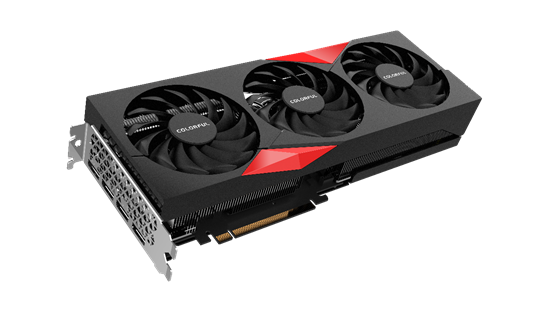
The GeForce RTX 3050 brings the performance and efficiency of the NVIDIA Ampere architecture to more gamers than ever before and is the first 50-class desktop GPU to power the latest ray traced games at over 60 fps. The RTX 3050 comes equipped with 2nd generation RT cores for ray tracing and 3rd generation Tensor cores for DLSS and AI. Ray tracing is the new standard in gaming and the RTX 3050 makes it more accessible than ever before.

COLORFUL iGame GeForce™ RTX 3050 Ultra W DUO

The GeForce RTX 3050 Ultra W DUO is a compact version of the Ultra W models having a dual-fan cooler design. With its shorter253mm length, the RTX 3050 Ultra W DUO fits in most desktop cases including most mini-ITX cases with tight spaces. It has white-colored fans, backplate, and aesthetics to match all-white PC builds. The RTX 3050 Ultra W DUO feature COLORFUL’s signature One-Key Overclock button that’s conveniently located on the rear I/O for a quick and easy performance boost.

iGame GeForce™ RTX 3050 Ultra W DUO Specifications

Model:iGame GeForce RTX 3050 Ultra W DUO OC 8G-V
CUDA Cores:2560
Game Clock:1552 MHz
Boost Clock:1822 MHz
Memory:8GB
Memory Type:GDDR6
Memory Bandwidth224GB/s
Power Connector1x 8-pin PCIe
Heatpipe size2x Φ6
Card Dimension253mm x 129.2mm x 45.6mm
Display Output3x DisplayPort, 1x HDMI

COLORFUL iGame GeForce™ RTX 3050 Ultra W OC

Expanding the Ultra Series graphics cards, the COLORFUL iGame GeForce RTX™ 3050 Ultra W OC’s white-colored fans, backplate, and aesthetics fit all-white theme PC builds. Being a larger version of the RTX 3050 Ultra W DUO, this card uses a triple-fan cooler for enhanced heat dissipation offering higher overclocking headroom and performance. The cooler uses two 90mm and one 80mm cooling fans. Its high-performance heatsink has two 6mm-diameter and two 8mm-diameter heat pipes connected to the fins using integrated reflow soldering.

iGame GeForce™ RTX 3050 Ultra W OC Specifications

Model:iGame GeForce RTX 3050 Ultra W OC 8G-V
CUDA Cores:2560
Game Clock:1552 MHz
Boost Clock:1822 MHz
Memory:8GB
Memory Type:GDDR6
Memory Bandwidth224GB/s
Power Connector2x 8-pin PCIe
Heatpipe size2x Φ6 + 2x Φ8
Card Dimension310mm x 131.5mm x 56mm
Display Output3x DisplayPort, 1x HDMI

COLORFUL iGame GeForce RTX™ 3050 NB EX

The COLORFUL GeForce RTX™ 3050 NB EX graphics card features a new look with its improved thermal cooling design and RGB lighting while retaining the eye-catching Black+Red Design. The improved cooler packs a triple-fan configuration and sports anesthetic metallic matte shroud and gaming red accents. The three 90mm cooling fans quickly dissipate heat from the high-performance heat sink with two 6mm-diameter heat pipes with direct touch to the GPU.

iGame GeForce™ RTX 3050 NB EX Specifications

Model:Colorful GeForce RTX 3050 NB DUO 8G-V
CUDA Cores:2560
Game Clock:1552 MHz
Boost Clock:1777 MHz
Memory:8GB
Memory Type:GDDR6
Memory Bandwidth224GB/s
Power Connector1x 8-pin PCIe
Heatpipe size2x Φ6
Card Dimension253.4mm x 132.5mm x 41mm
Display Output3x DisplayPort, 1x HDMI

Announcing the ASUS GeForce RTX 3070 Noctua Edition Graphics Card

ASUS and Noctua team up to create the coolest and quietest air-cooled graphics card in its class

KEY POINTS

  • ASUS GeForce RTX 3070 Noctua Edition features two Noctua NF-A12x25 PWM fans that deliver exceptional cooling with low noise
  • Noctua Edition’s bespoke heatsink is optimized to fully leverage the airflow characteristics of Noctua fans
  • Offers several signature features of ASUS graphics cards for ensuring performance and durability at every level

Mumbai, India, October 5, 2021 — ASUS today announced ASUS GeForce RTX™ 3070 Noctua Edition — a graphics card built around the spirit of Noctua enthusiasts and modders.

Noctua aficionados are some of the most dedicated PC DIYers, often creating custom builds with Noctua fans on every open case mount and with a distinctive Noctua cooler atop the CPU. The most die-hard fans even modify their graphics cards to use the distinctive cream-and-brown hardware as replacements for their stock GPU fans. If there is any place on a system to put a fan, Noctua enthusiasts can be counted on to add one. In addition to their visual appeal, Noctua fans have smooth noise signatures, optimized airflow characteristics and high reliability, making for cool and quiet PCs that are easy on the ear while delivering sustained high performance.

Inspired by the spirit of these enthusiasts, ASUS recently entered a long-term partnership with Noctua and took it a step further by collaborating on a graphics card that is customized to take advantage of the unique strengths of Noctua fans.

ASUS and Noctua technologies come together in one superlative graphics card

ASUS GeForce RTX 3070 Noctua Edition incorporates a pair of state-of-the-art Noctua NF-A12x25 fans to move air over a massive 2.3-slot heatsink developed in partnership between the veteran thermal R&D team at ASUS and engineers at Noctua. These engineers worked together to tune fin density and heat pipe arrangement of the heatsink, optimizing it for the airflow characteristics of the NF-A12x25. To prioritize low noise levels, a smooth acoustic signature, and high cooling performance while making room for this pair of 120 mm fans, the card’s total volume was expanded to occupy 4.3 slots of space.

“Using our extensive thermal R&D experience, we’ve created a new GPU heatsink that’s tailor-made for the performance characteristics of the state-of-the-art NF-A12x25 fans,” said Kent Chien, Corporate Vice President and General Manager of the ASUS Multimedia Business Unit. “Our teamwork gives noise-conscious gamers and Noctua enthusiasts a unique graphics card that maximizes heat dissipation per decibel of noise emitted, all in a package that coordinates perfectly with other Noctua products in a DIY PC.”

This cooperative development process resulted in some of the best thermal performance per decibel of noise emitted of any graphics card on the market. In comparison to the already excellent TUF Gaming GeForce RTX 3070 OC Edition, the Noctua Edition produces a 10 dB-lower sound pressure level when controlling for the same power limit, ambient temperature, and thermal junction temperature. Users who are concerned first and foremost about the noise levels and noise characteristics of their system will undoubtedly notice the difference.

“By using our NF-A12x25 fans and collaborating to fine-tune the heatsink for use with them, this card achieves a significant boost in performance-to-noise efficiency,” added Noctua CEO Roland Mossig. “The ASUS line-up of GeForce RTX 3070 cards is already outstanding, but we’re confident that the Noctua Edition will be the cherry on the cake for noise-conscious customers.”

Noctua enthusiasts often care as much about the aesthetics of their builds as they do about high performance and low noise levels. A custom brown shroud for the duo of NF-A12x25 fans complements their distinctive color scheme and provides a secure mounting system so zip ties aren’t needed. ASUS and Noctua logos on the front and sides of the shroud, along with subtle graphics on the full-length alloy backplate, help this card coordinate perfectly with other Noctua components in a system.

Beyond its bespoke heatsink and state-of-the-art fans, GeForce RTX 3070 Noctua Edition is outfitted with all of the signature features that ASUS graphics cards are known for. A dual-mode BIOS switch comes preset to Quiet mode for the optimal balance of noise and performance, while a 0 dB idle mode keeps noise levels to a minimum under light graphics loads. Exclusive Auto-Extreme assembly technology assures precise placement and clean soldering of onboard components, and a vented backplate design gives heated air a shortcut into a case’s natural airflow path. Also, a 144-hour validation process ensures that this card is ready to perform for the long run ― right out of the box.

Advanced Noctua fan technology makes the NF-A12x25 fan the ideal choice

The NF-A12x25 fan was an easy choice for this project because of the numerous innovations packed into its 120 mm frame. An impeller made from Noctua’s proprietary Sterrox® liquid-crystal polymer has an exceptionally low thermal expansion coefficient, allowing the fan blades to sit just 0.5 mm away from the outer frame. This extremely tight tolerance allows the NF-A12x25 to work more efficiently against back pressure by reducing the leakage of airflow between the blade tips and the outer frame. A metal-reinforced motor hub and axis further support this highly precise gap between impeller and frame.

Furthermore, a custom PWM IC with Smooth Commutation Drive technology reduces fan noise levels at lower speeds. An acoustic profile specifically tuned for a smooth and pleasant character, even against back pressure, is ideal for a GPU heatsink application. Flow Acceleration Channels at the tip of each impeller blade both improve efficiency and lower vortex noise. Inner Surface Microstructures on the fan frame reduce the noise from passing fan blades. Anti-vibration pads made from soft silicone prevent the transmission of sympathetic vibrations to the graphics card and on through the case. These advanced features have led to hundreds of media awards and a reputation as the best 120 mm fan on the market.

Nvidia RTX 2080 vs. GTX 1080: A next-gen gaming laptop showdown

The latest gaming laptops with Nvidia RTX 2080 graphics take on a last-gen leader.

The Acer Triton 500 gaming laptop. Sarah Tew/CNET

The Acer Triton 500 gaming laptop.
Sarah Tew/CNET

Now that we’re a couple of months into the RTX laptop era, it’s time to pause and look at how this first wave of laptops with Nvidia’s hyped-up new mobile graphics technology fares in real-world testing.

If you’ve been living under a rock (or don’t follow the ins and outs of PC component upgrades), Nvidia’s new RTX 20-series GPUs are the biggest shift in mobile gaming graphics since 2016.

Several key new features help differentiate the RTX 2060, 2070 and 2080 from the GTX cards that came before. Real-time ray tracing better simulates light, allowing for new kinds of reflections and more realistic scenes. Key is the ability to reflect objects that are off-screen, which has been next to impossible before now. Games that specifically support that include Battlefield V and Metro Exodus.

There’s also DLSS, which stands for Deep Learning Super-Sampling, which uses cloud-based AI to simulate games at insanely high resolutions and teaches your GPU how to mimic that level of detail. This requires DLSS-compatible games, and the initial list includes Shadow of the Tomb Raider, Darksiders 3 and Anthem.

We’ve already been able to test five RTX-powered laptops, from Lenovo, Acer, Asus, MSI and Razer, with more on the testing bench right now. These are, for the most part, existing laptops models upgraded to new internal components. RTX-native laptops, like the Asus Mothership, are coming later.

Disclosure: CNET may get a share of revenue from the sale of products featured on this page.


MSI GS75 Stealth 8SG (Nvidia RTX 2080 Max-Q) $2,999 See it at Amazon
Lenovo Legion Y740-17 (Nvidia RTX 2080 Max-Q) $2,319 See it at Lenovo
Asus Zephyrus GX701 (Nvidia RTX 2080 Max-Q) $3,299 See it at Amazon
Acer Predator Triton 500 (Nvidia RTX 2080 Max-Q) $2,999 See it at Amazon
Razer Blade 15 (Nvidia RTX 2060) $2,349 See it at Razer

What’s under the hood?

All of these laptops, from around $2,300 up to $3,300, use the same processor, the 2.2GHz Intel Core i7-8750H. And four out of five use the same GPU, the new Nvidia GeForce RTX 2080 Max-Q. Nvidia introduced the Max-Q variant in 2017 as a way to get higher-end GPUs into slimmer laptops, but it does have a modest effect on overall performance.

The fifth laptop, a new version of the excellent Razer Blade, has the Nvidia RTX 2060 (non-Max-Q) inside. To be honest, playing $2,300 for the lowest-end new GPU in the family stings a bit, and the performance scores show just how much there is to gain with the higher-end 2080 GPUs. It’s otherwise one of my favorite gaming laptops, especially in the alternate white version we have here.

For the most part, the results are as expected. The new 2080 Max-Q systems came out on top, with the very expensive Asus Zephyrus usually edging out a win. Note we used out-of-the-box settings for laptops like the Acer Triton 500 that offer software overclocking options.

One of our favorite last-gen gaming laptops, Alienware’s 17-inch R4 model, with a full-power (not Max-Q) GeForce GTX 1080, was slower than the 2080 systems in all but one test, and the Razer with its RTX 2060 was consistently the least powerful, but frankly still very good for playing almost any game at high-end settings. Razer also offers RTX 2070 and 2080 models, but these cost a good deal more.

The Lenovo Y740 frankly feels like a great deal, even if it’s not my favorite physical design. Lenovo has an ever-changing series of discounts and deals on its website, and as of this writing, you can get a 2080 Max-Q laptop for $2,087 (with less RAM and SSD storage than our test unit).

Test scores and system configurations are below, and we’ll update these with new gaming laptops as we test them. See more news and reviews for PC and Mac laptops, tablets and desktops here.


MSI GS75 Stealth 8SG (Nvidia RTX 2080 Max-Q) Microsoft Windows 10 Home (64-bit); 2.2GHz Intel Core i7-8750H; 32GB DDR4 SDRAM 2,666MHz; 8GB Nvidia GeForce RTX 2080 with Max-Q Design; 512GB SSD
Acer Predator Triton 500 (Nvidia RTX 2080 Max-Q) Microsoft Windows 10 Pro (64-bit); 2.2GHz Intel Core i7-8750H; 32GB DDR4 SDRAM 2,666MHz; 8GB Nvidia GeForce RTX 2080 with Max-Q Design; (2) 512GB SSD RAID 0
Asus Zephyrus GX701 (Nvidia RTX 2080 Max-Q) Microsoft Windows 10 Pro (64-bit); 2.2GHz Intel Core i7-8750H; 24GB DDR4 SDRAM 2,666MHz; 8GB Nvidia GeForce RTX 2080 with Max-Q Design; 1TB SSD
Razer Blade 15 (Nvidia RTX 2060) Microsoft Windows 10 Home (64-bit); 2.2GHz Intel Core i7-8750H; 16GB DDR4 SDRAM 2,666MHz; 6GB Nvidia GeForce RTX 2060 with Max-Q Design; 512GB SSD
Lenovo Legion Y740-17 (Nvidia RTX 2080 Max-Q) Microsoft Windows 10 Home (64-bit); 2.2GHz Intel Core i7-8750H; 16GB DDR4 SDRAM 2,666MHz; 8GB Nvidia GeForce RTX 2080 with Max-Q Design; 256GB SSD + 1TB HDD
Alienware 17 R4 (Nvidia GTX 1080) Microsoft Windows 10 Home (64-bit); 2.9GHz Intel Core i7-7820HK; 16GB DDR4 SDRAM 2,400MHz; 8GB Nvidia GeForce GTX 1080; 512GB SSD + 1TB HDD